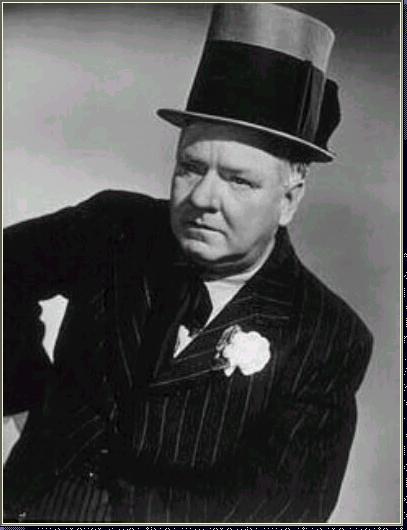
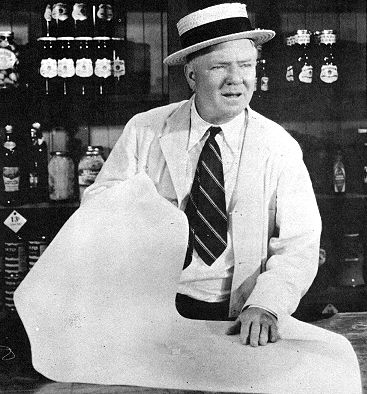
Actor, Screenwriter William Claude Dukenfield on the January 29, 1880, Married Harriet Hughes (8 August 1900 - 25 December 1946) 1915 - 1946 Of Stomach Hemarrhage, on 25 December, 1946, Pasadena, California, USA. A Charles Dickens character come to life, American comedian W. C. Fields ran away from a very abusive home at age 11. Continuous exposure to cold weather gave his voice its distinctive hoarse timbre, while constant fights with bigger kids gave Fields his trademarked red, battered nose. Perfecting his skills as a juggler until his fingers bled, Fields became a vaudeville headliner before the age of 21, traveling the world with his pantomimed comedy juggling act. After making his Broadway debut in the musical comedy The Ham Tree (1906), "W.C. Fields -- Tramp Juggler", as he then billed himself, achieved the pinnacle of stage stardom by signing on with impresario Flo Ziegfeld. Somewhere along the line the comedian decided to speak on stage, to the everlasting gratitude of Fields fans everywhere. Though his flowery, pompous comic dialogue would seem to have been indispensable, Fields did rather well in silent films (the first was the (1915) one-reeler Pool Sharks) thanks to his keen juggler's dexterity. In (1923), Fields took Broadway by storm with a part specially written for him in the musical Poppy. As larcenous snake-oil peddler Eustace McGargle, the comedian cemented his familiar stage and screen persona as Confidence Man Supreme. Poppy was filmed as Sally of the Sawdust by director D.W. Griffith in (1925); incredible as it may seem, Fields was not the first choice for the film, but once ensconced in celluloid (to use a Fields-like turn of phrase), he became a favorite of small-town and rural movie fans -- even though it was those very fans who were often the targets of Field's brand of social satire. From (1930) through (1934), Fields appeared in talking feature films and short subjects, truly hitting his stride in It's a Gift (1934), which contained his famous "sleeping on the back porch" stage sketch. By this time, audiences responded to his characterization of the bemused, beleaguered everyman, attacked from all sides by nagging wives, bratty children, noisy neighbors and pesky strangers. His film characters also embraced his offstage adoration of alcoholic beverages; it is no news to anyone familiar with Fields that he was one of the more conspicuous and prolific drinkers of his time. In private life, Fields was perhaps Hollywood's most enigmatic personality. He was simultaneously an inveterate ad-libber and improviser who meticulously prepared his ad-libs and improvisations on paper ahead of time; a nasty, obstinate man surrounded by loyal and lasting friends; a racial bigot whose closest chums included Jewish entertainer Eddy Cantor and African American comic Bert Williams; a man disliked by directors and producers, beloved by most of his fellow actors; and a man who showed up late and hung over on the film set, but who never missed a performance and finished all his films on schedule and under budget. Though most fans prefer Fields' freewheeling starring comedies, which he wrote under such colorful pseudonyms as "Otis Cribblecrossis" and "Mathatma Kane Jeeves," he also shone in at least one prestige picture, MGM's David Copperfield (directed by George Cukor, who contrary to expectation got along splendidly with Fields), wherein Fields portrayed Mr. Micawber. A was more surreal than funny, and Never Give a Sucker an Even Break (1941) makes very little sense, but The Bank Dick (1940), starring Fields as Egbert Souse is an unadulterated classic. Too ill to contribute anything but guest appearances in his final films. W. C. Fields died at age 67 on the one holiday he claimed he despised: Christmas Day. |
 Occupation
  serious illness curtailed Fields' film work in